
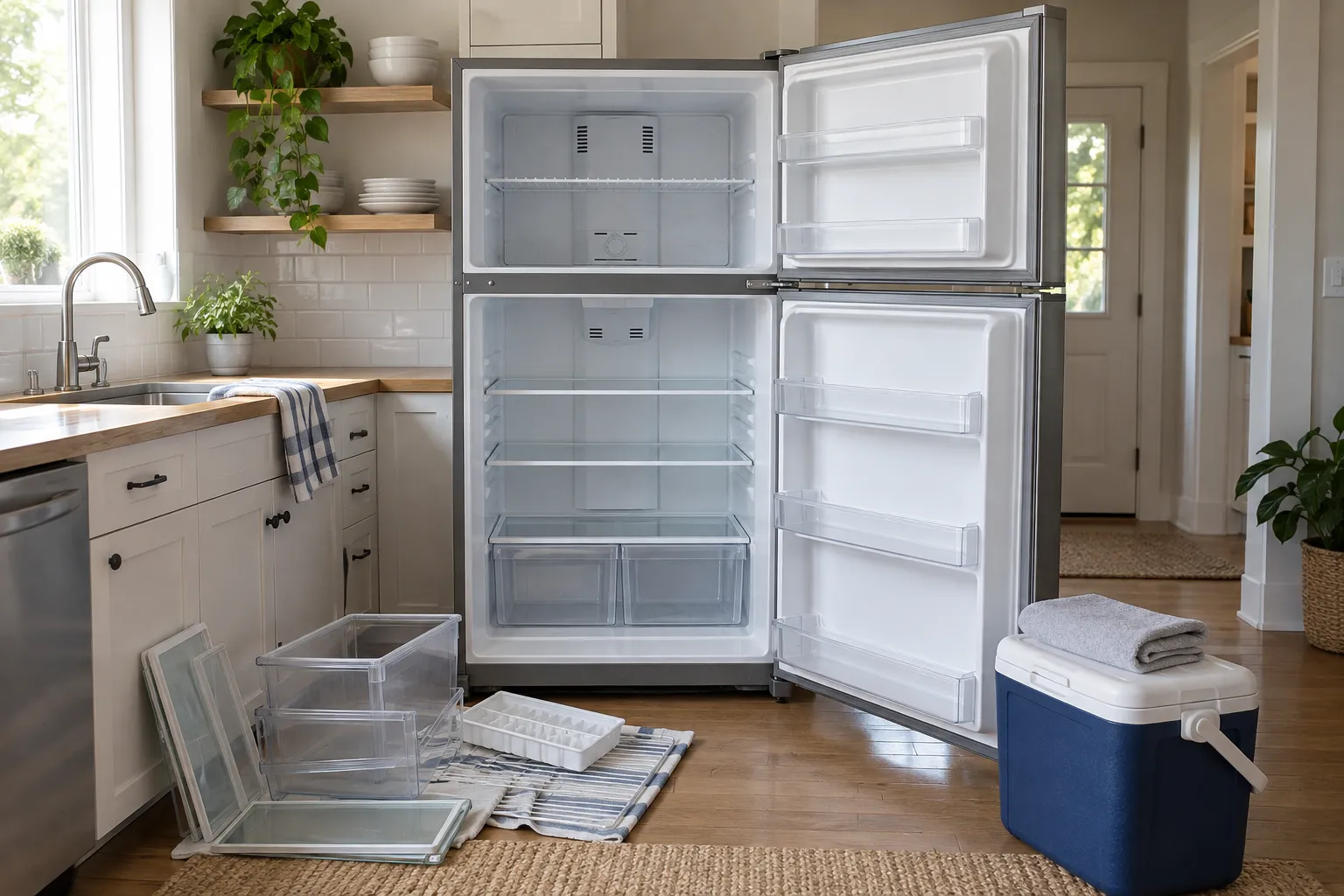
Move food to a working freezer or cooler before switching the old freezer off. Follow its manual for defrosting, allow time for ice to melt and manage the water so it does not damage the floor. A chest freezer can be wide and awkward even when empty, so measure the whole route before anyone tries to move it.
Plan for ice and meltwater
Remove baskets and loose contents, then check the manufacturer's instructions for the model's defrost method. Use towels or a suitable tray where water can collect. Do not chip ice with a sharp tool; it can damage the liner or concealed parts. If the appliance is leaking or has been damaged, describe that condition when arranging pickup.
Measure the route and protect the sealed system
Record the freezer's width, depth and height. A chest model may clear a door only in one orientation; an upright may have a high center of gravity. Photograph stairs, narrow turns and the loading point. Do not cut tubing or remove the compressor to make the unit fit. The U.S. EPA says consumers should not tamper with refrigerant-bearing appliances before disposal, including cutting lines or removing compressors. EPA appliance disposal FAQ, checked September 28, 2026.
Freezer pickup checklist
- Type: chest or upright, and approximate dimensions
- Food transferred and loose baskets removed
- Defrost timing and remaining ice or water
- Visible damage or suspected refrigerant-line damage
- Narrowest doorway, stairs and loading distance
- Whether the freezer is in a garage, house or upper floor
The freezer removal page explains pickup scope. For a related cooling appliance, see the refrigerator checklist. Keep the estimate details handy when discussing the job.
 Call now