
A built-in dishwasher should be empty, safely disconnected from water and power, and free of cabinet fasteners before it is treated as an item ready for hauling. The person arranging removal should identify who will do that preparation. A portable dishwasher is a different job, so state which type you have when requesting pickup.
Water and power come first
Whirlpool's installation guidance says dishwasher removal involves shutting off electrical power and water, disconnecting the supply and drain lines, and catching water left in the hose. Those steps depend on the model and installation. If wiring, plumbing or a shutoff is unfamiliar, use a qualified professional rather than working behind a panel by guesswork. Whirlpool dishwasher installation guide, checked September 28, 2026.
Tell the pickup provider whether the appliance is still fastened to the counter or cabinetry. A hauling crew may be able to lift and load a disconnected dishwasher but should not be assumed to perform plumbing, electrical or cabinet alterations.
Measure beyond the cabinet opening
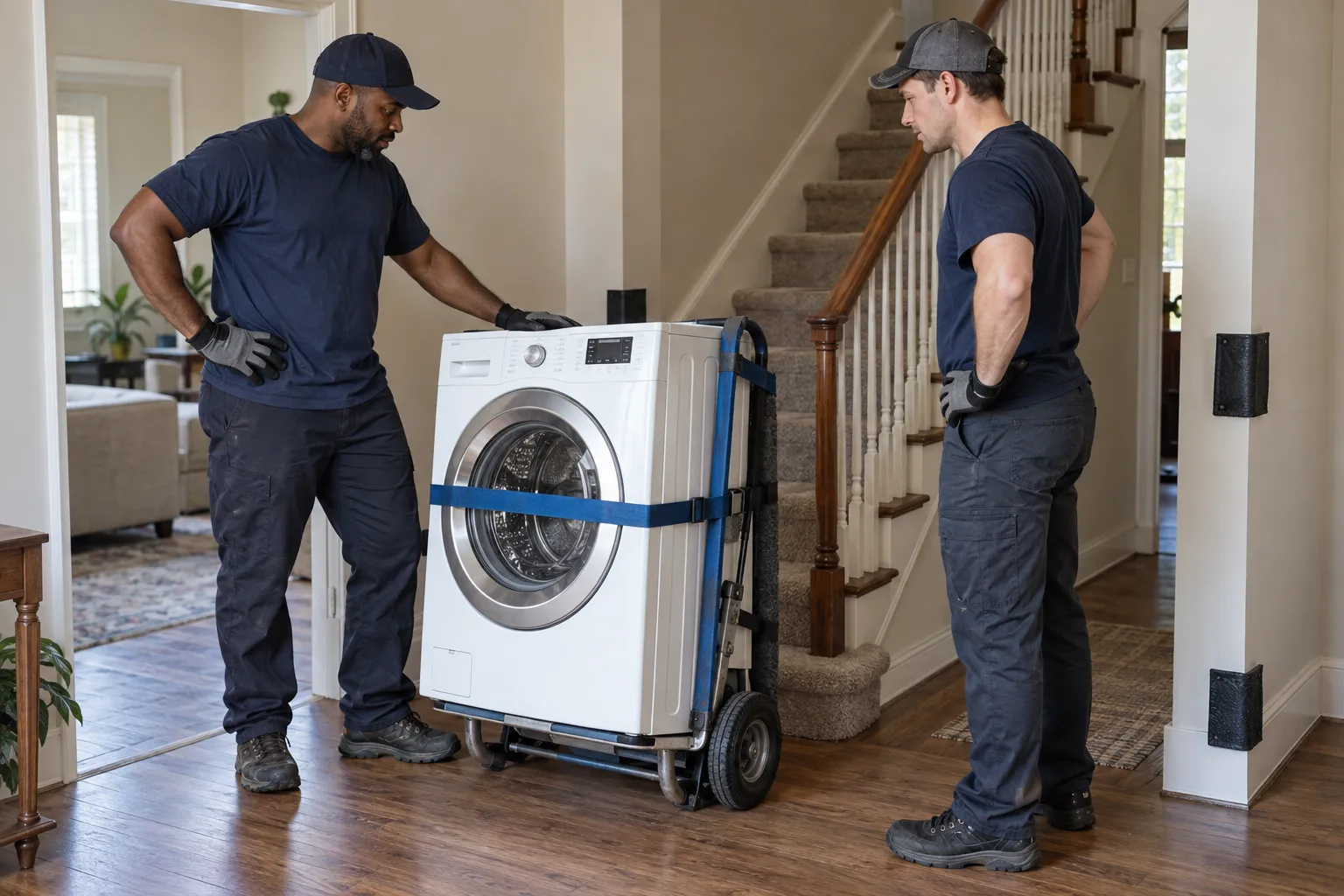
Once the unit is safe to move, the next question is whether it clears the kitchen opening and the path to the vehicle. Note flooring transitions, islands, tight turns, stairs and the distance to legal parking. A photo from the front of the dishwasher and a second photo of the narrowest exit often answer more than a model number alone.
A short request checklist
- Portable or built-in model
- Whether power and water are disconnected
- Any standing water or leak
- Cabinet fastening and toe-kick status
- Width of the unit and narrowest passage
- Floor level and loading access
See the dishwasher removal page for scope and estimate factors. The measurement guide covers doorways and turns. Use the estimate checklist to collect the details in one place.
 Call now